
Your Own Cells:
What Does “Autologous” Really Mean?
If the cells come from your own body, what actually changes? A closer look at the autologous approach, individual biology and why specialist oversight matters.
If someone tells you a cellular approach uses your own stem cells, the idea sounds straightforward: the cells come from you.
But what does that actually change?
Autologous means that the biological material comes from the same individual who will receive it. In simple terms, the source is your own body. [1]
That has an intuitive appeal. But “your own” does not automatically mean better, and it does not guarantee a particular result. What it changes is the starting point of the medical process.
It starts with the source
Cell-based approaches may begin with cells from the individual or from a donor. Each model has its own rationale, practical strengths and limitations.
Donor-derived approaches may offer advantages such as availability and more standardised preparation. With an autologous approach, the source and intended recipient are the same person.
That distinction affects how the cells are obtained, how the process is planned and what needs to be considered before moving forward. And because the starting material comes from an individual, the biology is individual too.
Personal does not mean predictable
People do not mobilise or yield blood-forming stem and progenitor cells in exactly the same way. Studies in healthy volunteers and donors show meaningful person-to-person variation in mobilisation and collection. [2]
Personalised should not be confused with predictable.
That variability is not automatically good or bad. It is part of working with living biology – and one reason individual medical assessment matters.
Your own cells still have to be collected
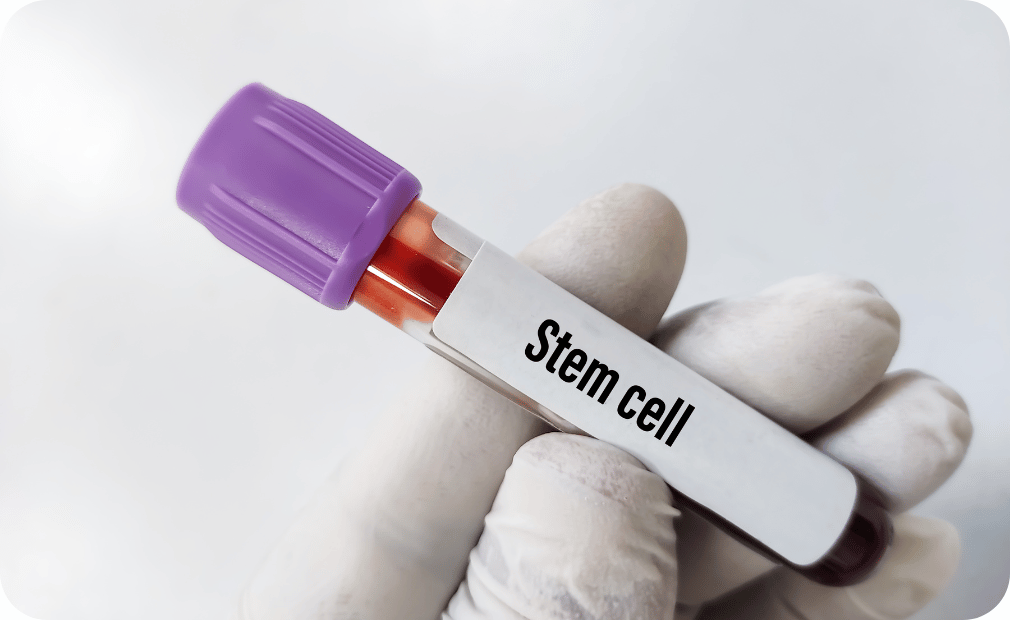
“Using your own stem cells” can sound almost as simple as having blood drawn. It is not. Blood-forming stem cell and progenitor cells reside predominantly in the bone marrow.
Mobilisation can increase the number circulating in peripheral blood, where apheresis can be used to collect the relevant blood-derived cellular fraction while returning the remaining blood components to the individual. [2,3] So an autologous approach is more than choosing a cell source. It involves assessment, mobilisation, collection planning and appropriate specialist oversight.
There should still be room for uncertainty
A plausible biological rationale is not the same as a predictable clinical result. Evidence from one cell type, preparation, route or medical condition should not simply be assumed to apply to another. ISSCR guidance likewise emphasises accurate communication, appropriate oversight and restraint around unsupported claims. [4]
For someone considering an autologous approach, the useful questions are practical: what is being collected, why is this approach being considered in this individual case, and what can – and cannot – reasonably be expected?
Once that idea is clear, the next question is usually simpler: how are the cells actually mobilised and collected?
Selected references
[1] National Cancer Institute. Definition of “autologous”: taken from an individual’s own tissues, cells, or DNA. https://www.cancer.gov/publications/dictionaries/cancer-terms/def/autologous
[2] Liles WC, et al. Mobilization of hematopoietic progenitor cells in healthy volunteers by AMD3100, a CXCR4 antagonist. Blood. 2003;102(8):2728-2730. PMID: 12855591.
[3] AABB. Hematopoietic Stem Cells / Peripheral Blood Progenitor Cells: collection by apheresis. https://www.aabb.org/blood biotherapies/biotherapies/facts-about-cellular-therapies/hematopoietic-stem-cells
[4] International Society for Stem Cell Research (ISSCR). Guidelines for Stem Cell Research and Clinical Translation; Communications and Clinical Translation sections. 2025. https://www.isscr.org/guidelines
Written by Parintorn Nakdee 69278
Transfusion Medicine
Medical Wellness by Hertitude Clinic